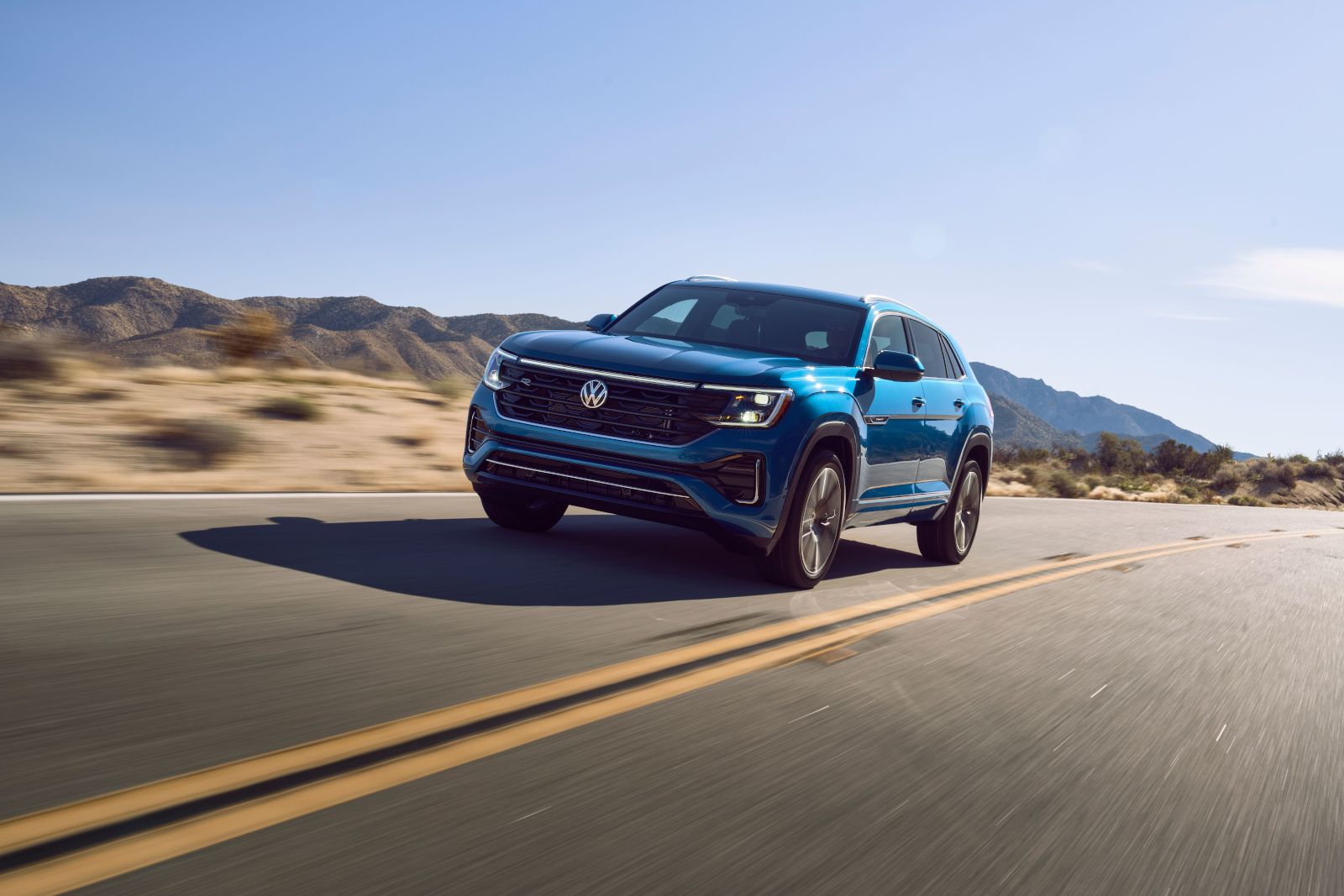
Driving across Southern Alberta means facing one of the region's most persistent challenges: strong crosswinds sweeping across open prairie highways. For families in Medicine Hat and surrounding areas, vehicle stability in these conditions isn't just a comfort feature—it's a safety necessity. The 2026 Volkswagen Atlas Cross Sport addresses this reality with Electronic Stability Control (ESC) and a suite of complementary safety technologies designed to keep you confident and secure, even when gusts try to push you off course.
Whether you're commuting along the Trans-Canada Highway, heading to Lethbridge for the weekend, or navigating rural routes where wind can arrive suddenly and forcefully, understanding how your vehicle responds to crosswinds matters. Here's how the Atlas Cross Sport's stability systems work together to help Southern Alberta drivers maintain control in challenging conditions.
Understanding Electronic Stability Control in the Atlas Cross Sport
Electronic Stability Control (ESC) serves as the Atlas Cross Sport's foundation for managing unpredictable driving situations, including strong crosswinds. This system continuously monitors your vehicle's intended path versus its actual trajectory. When ESC detects a difference—such as when a sudden gust pushes the vehicle sideways—it automatically applies braking to individual wheels and adjusts engine power to help you stay on course.
In crosswind scenarios common to Southern Alberta's open highways, ESC works by:
- Detecting lateral movement caused by wind pressure against the vehicle's profile
- Comparing steering input with actual vehicle direction
- Applying targeted braking to specific wheels to counteract sideways drift
- Reducing engine torque momentarily if needed to restore stability
The 2026 Atlas Cross Sport pairs ESC with 4MOTION All-Wheel Drive across both Highline and Execline trims. This combination matters in crosswind situations because 4MOTION can redistribute power between front and rear axles within milliseconds, helping maintain traction and directional control when wind forces try to unsettle the vehicle. The system's ability to respond faster than human reaction time means it's already correcting before you fully register the disturbance.
How Travel Assist Reduces Driver Fatigue in Windy Conditions
Long stretches of prairie highway with persistent crosswinds can be mentally and physically exhausting. The Atlas Cross Sport's Travel Assist system—which combines Adaptive Cruise Control, Lane Assist, and Emergency Assist—reduces this fatigue by helping you maintain your lane position even when wind gusts push against the vehicle.
Lane Assist uses a camera to monitor road markings and provides gentle steering corrections if the vehicle begins drifting out of its lane. In crosswind conditions, this means the system can help counteract the constant small adjustments drivers typically make to compensate for wind pressure. Rather than fighting the steering wheel for hours, you benefit from automated assistance that keeps the Atlas Cross Sport centred in its lane.
Adaptive Cruise Control maintains your set speed and following distance, which proves valuable when crosswinds vary in intensity. The system automatically adjusts throttle and braking, allowing you to focus on steering inputs and road awareness rather than constantly modulating the accelerator pedal.
Emergency Assist monitors driver activity through steering wheel inputs. If the system detects no steering movement for an extended period—which could indicate driver distraction or a medical emergency—it initiates a controlled slowdown while activating hazard lights and increasing visual and audible warnings. This safety net matters on long, monotonous prairie drives where attention can wane.
Side Assist and Rear Traffic Alert: Managing Wind-Affected Lane Changes
Changing lanes in strong crosswinds requires extra caution. Wind can affect your vehicle's trajectory during the manoeuvre, and it can also influence other vehicles around you. The Atlas Cross Sport's Side Assist—Active Blind Spot Monitor with Rear Traffic Alert—provides critical awareness in these moments.
Side Assist uses radar sensors to monitor blind spots on both sides of the vehicle. When another vehicle enters these zones, a visual indicator illuminates in the corresponding side mirror. If you signal a lane change while a vehicle occupies your blind spot, the warning intensifies to alert you before you move over.
In crosswind conditions, this system helps because:
- Other vehicles may drift slightly in their lanes due to wind, making their positions less predictable
- Large trucks and trailers are particularly susceptible to crosswind effects, potentially moving into adjacent lanes unexpectedly
- Your own vehicle may track differently than usual during lane changes, making precise awareness of surrounding traffic more important
Rear Traffic Alert extends this awareness when reversing out of parking spaces—useful when returning to your vehicle after it's been parked in windy conditions that may have reduced your visibility or affected other drivers' approach paths.
At a Glance: 2026 Atlas Cross Sport Stability Features

|
System
|
Function in Crosswind Conditions
|
|
Electronic Stability Control (ESC)
|
Automatically corrects vehicle trajectory when wind causes lateral drift
|
|
4MOTION All-Wheel Drive
|
Redistributes power to maintain traction and directional control
|
|
Travel Assist (Lane Assist)
|
Provides steering corrections to maintain lane position despite wind pressure
|
|
Side Assist with Rear Traffic Alert
|
Monitors blind spots and alerts to vehicles that may be affected by crosswinds
|
|
Hill Hold Assist and Hill Descent Control
|
Prevents rollback on inclines when wind combines with grade changes
|
Additional Safety Technologies Supporting Crosswind Stability
Beyond the primary stability systems, the Atlas Cross Sport includes several supporting technologies that enhance overall control in challenging conditions:
Dynamic Headlights with Cornering Lights help maintain visibility when crosswinds occur during turns or curves, illuminating the direction you're steering rather than straight ahead. This matters on rural Alberta roads where curves may coincide with exposed areas prone to strong gusts.
Front Assist with Automatic Emergency Braking and Pedestrian/Cyclist Monitoring remains active even when you're focused on managing crosswind effects. If the system detects an imminent collision while you're compensating for wind pressure, it can automatically apply brakes to reduce impact severity or avoid the collision entirely.
Hill Hold Assist and Hill Descent Control prove valuable when crosswinds coincide with grade changes—common on river valley approaches or coulees in Southern Alberta. Hill Hold prevents rollback when starting on an incline, while Hill Descent maintains controlled speeds on steep descents, allowing you to focus on steering inputs rather than brake modulation when wind adds complexity.
Practical Considerations for Southern Alberta Drivers
The Atlas Cross Sport's stability systems work most effectively when combined with appropriate driving practices for crosswind conditions:
Keep both hands on the steering wheel and maintain a firm but relaxed grip. The vehicle's systems will provide corrective inputs, but you need to be ready to respond if conditions exceed automated assistance capabilities.
Reduce speed when crosswinds intensify. While ESC and 4MOTION enhance stability, physics still applies—lower speeds give systems more time to react and reduce the force wind can exert on the vehicle's profile.
Increase following distance from vehicles ahead, particularly large trucks and trailers that may be more severely affected by crosswinds and could suddenly change position.
Be especially cautious when transitioning between sheltered and exposed areas. Wind can hit suddenly when you emerge from a tree line, building cluster, or terrain depression onto open highway.
Which Atlas Cross Sport Trim Offers These Features?
Both the Highline 4MOTION and Execline 4MOTION trims include the complete suite of stability and safety technologies discussed in this article as standard equipment. The primary differences between trims lie in comfort and convenience features rather than safety systems:
Highline 4MOTION includes ESC, 4MOTION All-Wheel Drive, Travel Assist, Side Assist with Rear Traffic Alert, Hill Hold Assist and Hill Descent Control, Dynamic Headlights with Cornering Lights, and Front Assist with Automatic Emergency Braking. It rides on 20-inch Plus machined alloy wheels with all-season tires (255/50 R20 105T).
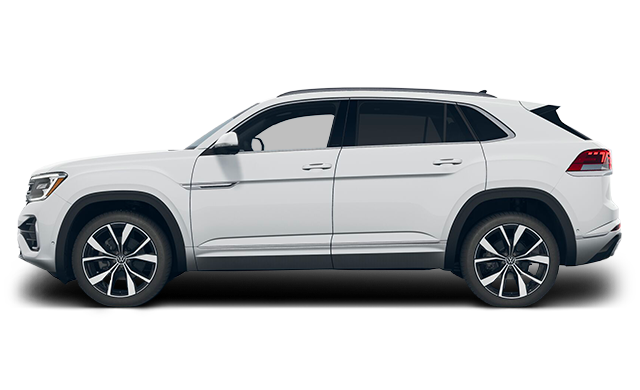
Execline 4MOTION adds premium interior appointments including ventilated front seats with massage function, power-adjustable lumbar support, premium leather seating surfaces, Park Assist, and Head-Up Display. It upgrades to 21-inch Din machined alloy wheels with all-season tires (265/45 R21 104T) and features R-Line exterior design.
Both trims share the same 2.0 L 4-cylinder TSI turbocharged engine producing 269 horsepower and 273 lb-ft of torque, paired with an 8-speed automatic transmission with Tiptronic. Combined fuel economy is rated at 10.7 L/100 km.
Experience Confident Driving at Straightline Volkswagen Medicine Hat
The 2026 Atlas Cross Sport's stability technologies are designed to handle the specific challenges Southern Alberta drivers face, from persistent prairie crosswinds to variable weather conditions throughout the year. Visit Straightline Volkswagen Medicine Hat to experience how ESC, 4MOTION All-Wheel Drive, and Travel Assist work together to keep you confident and secure on Alberta's highways. Our team can demonstrate these systems and help you understand how they'll perform in the driving conditions you encounter most often around Medicine Hat and across the region.